Dethermalisers (d/ts)
Preventing fly-aways
We love to see our models fly, but sometimes they hook a thermal that is too good, or stray towards areas we rather they didn't. A dethermaliser brings a model down promptly and safely. They require a timer or control device and an actuator mechanism.
Timers/triggers
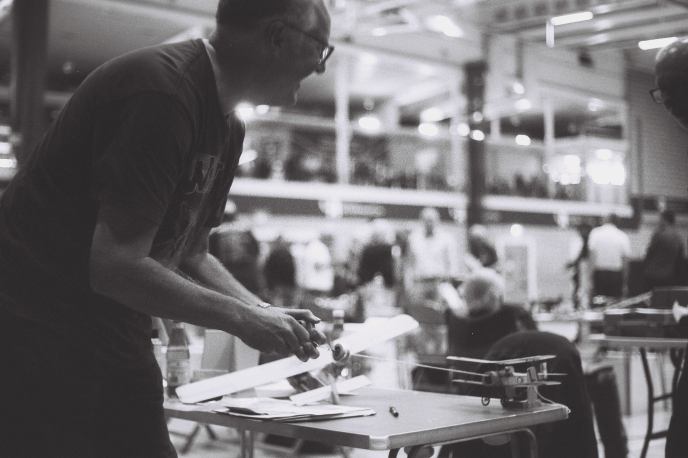
Burning fuses were the traditional timer, but are now rarely used in the UK. They have been replaced with onboard timers (clockwork, viscous or electronic). Radio d/t triggers are slightly more complex and costly, but have a great advantage of allowing the operator to choose when to activate the dethermaliser.
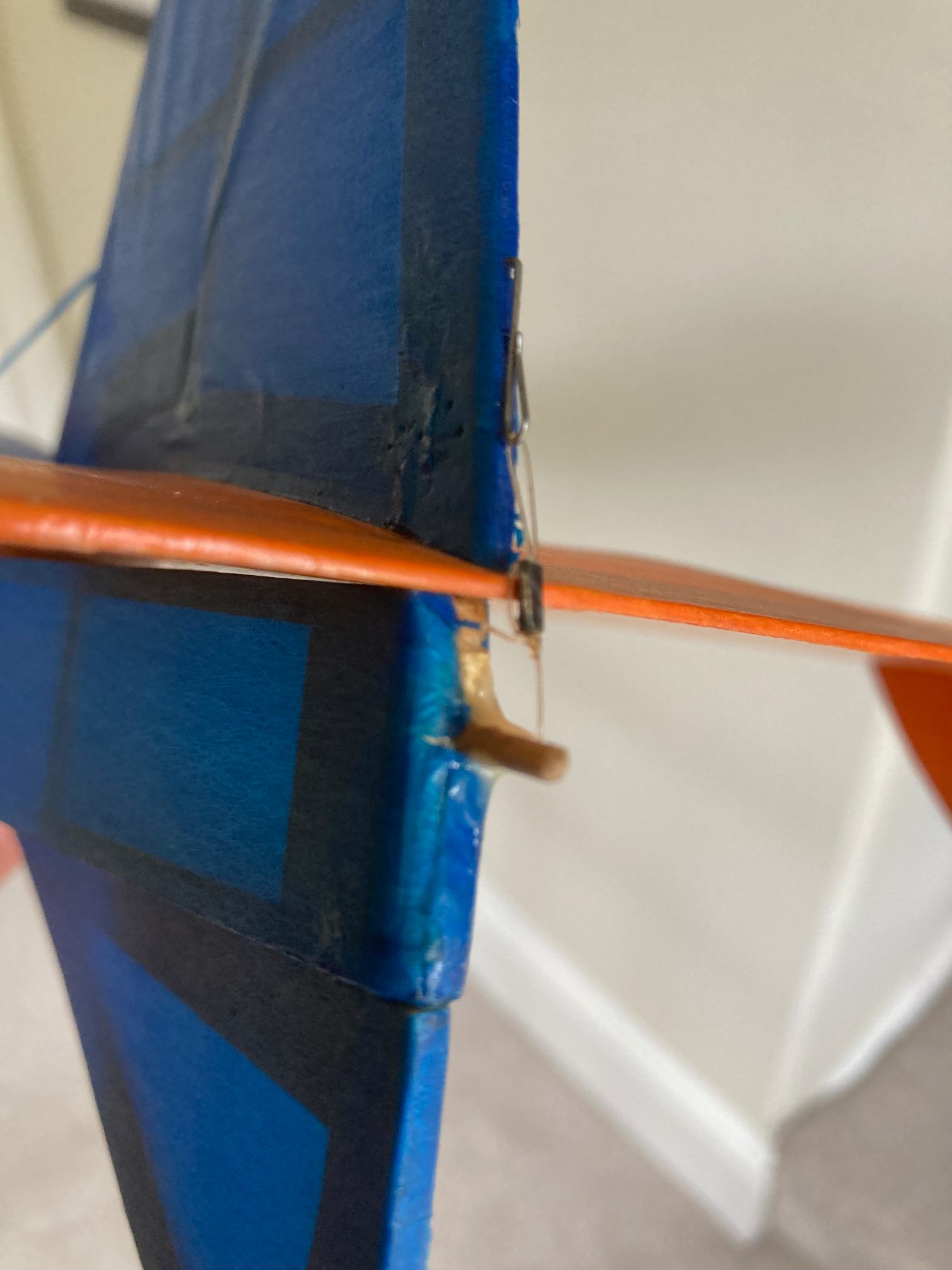
Actuator Mechanisms
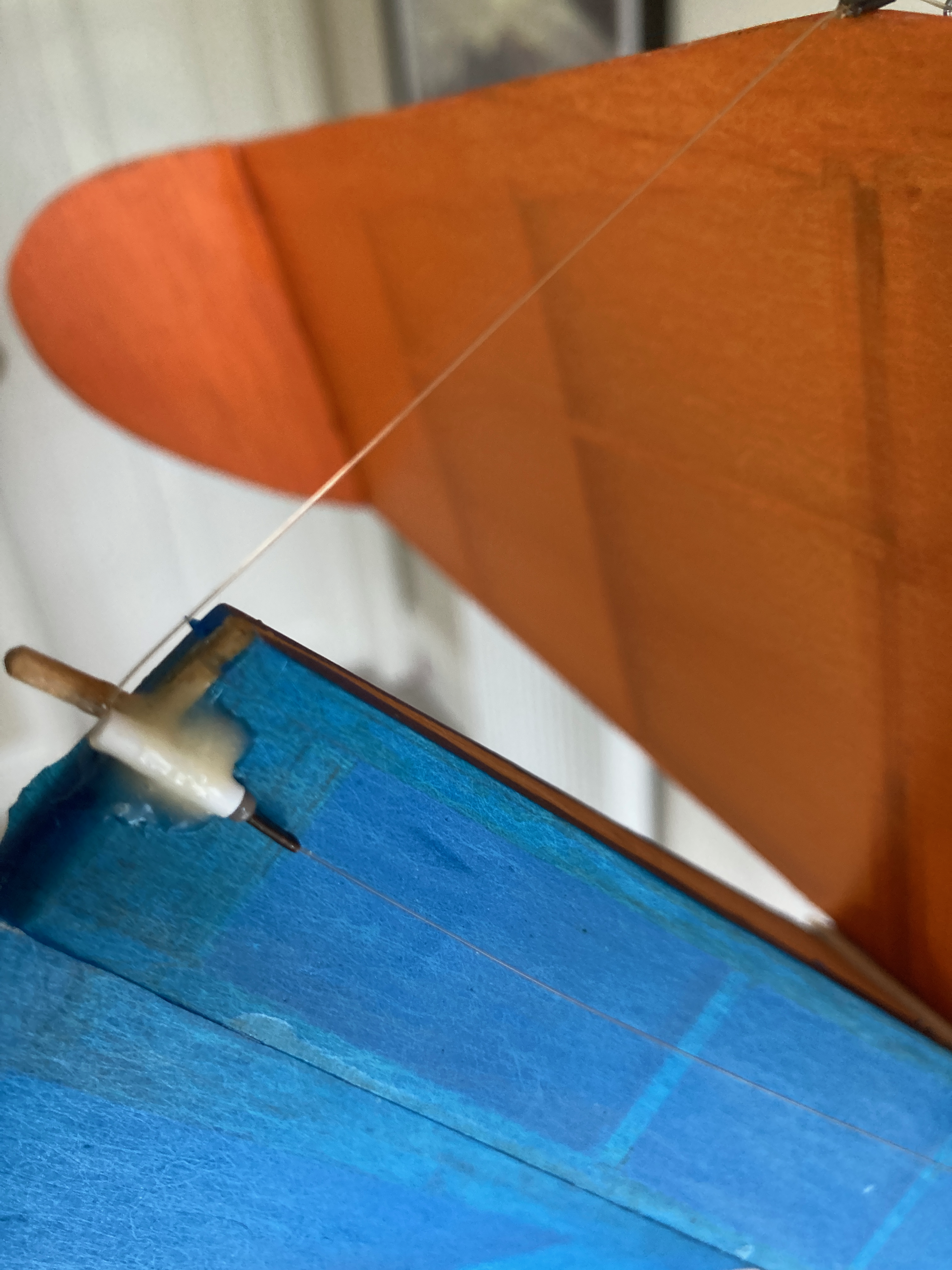
This model has a pop-up tail; a line holds the tailplane down. Once released, rubber bands pull the tail up, stalling the model. This video has a good description of the types of dethermaliser actions; pop-up tails, wing release etc. The video talks initially of burning fuse triggers which are now discouraged in the UK, other timers are described from 9:20 in this video.
Autonomous control
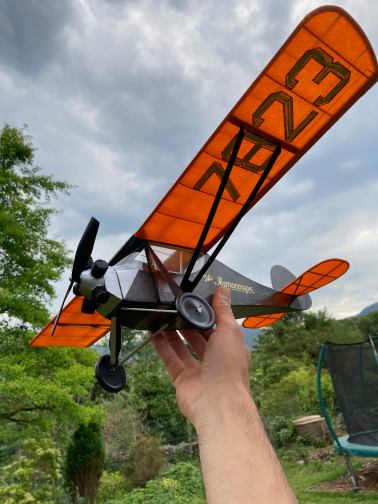
An onboard timer can do more than just bring the plane down. Competition power models use them to control the engine run, some models also vary the wing and tail positions during flight. Electric powered models have flight controllers [LINK] to control the motor power and therefore the flight profile.
An example
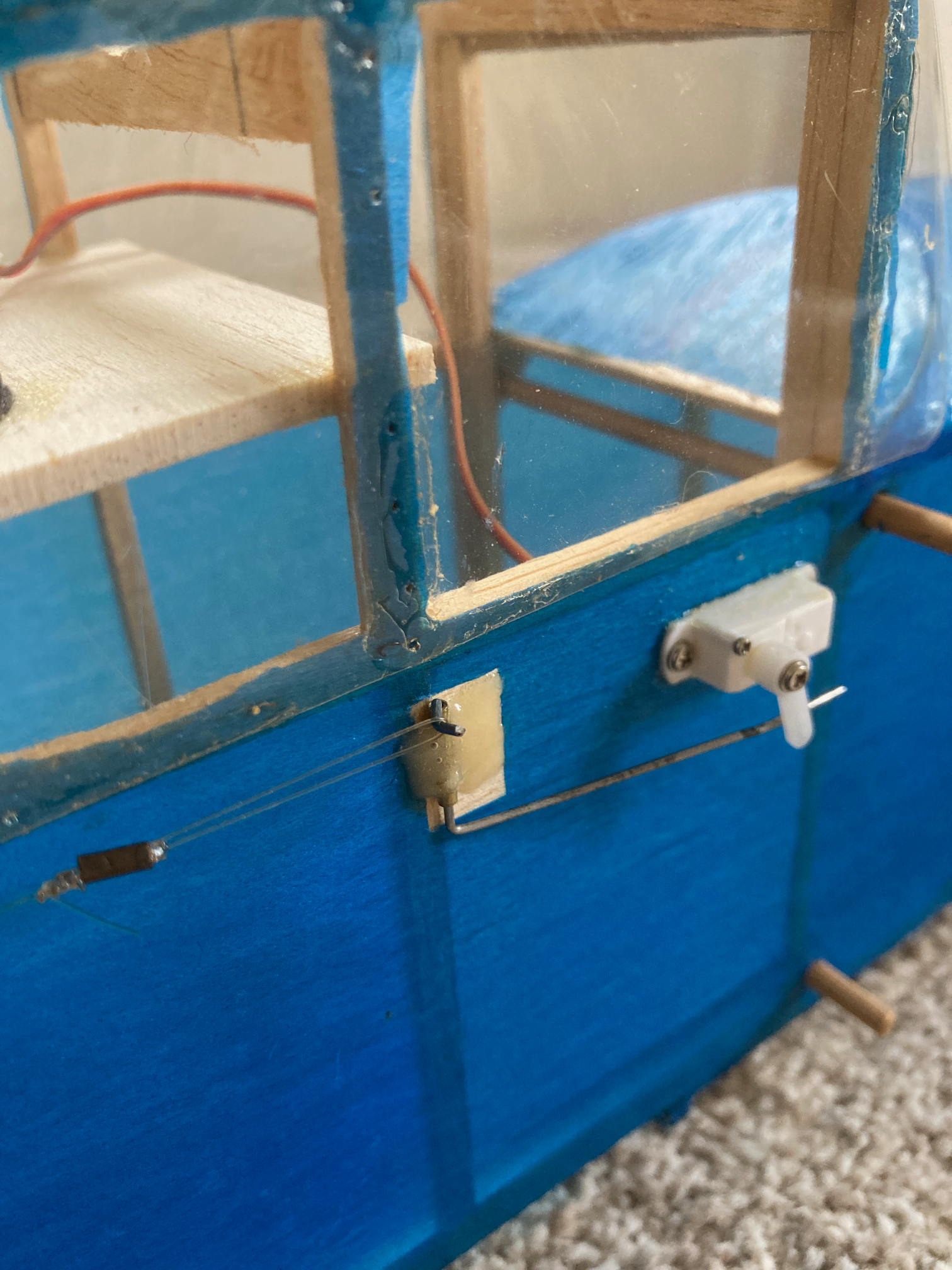
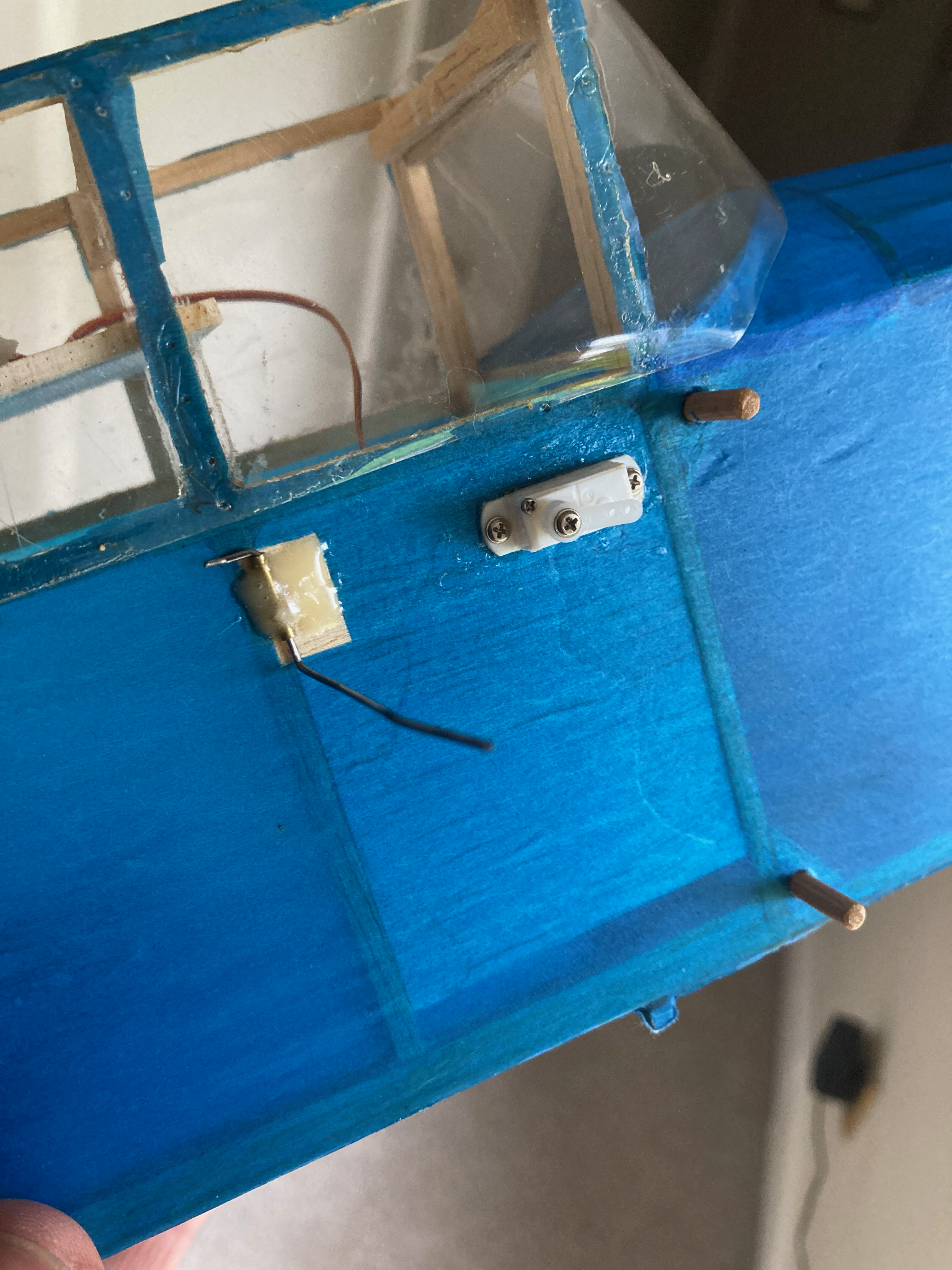
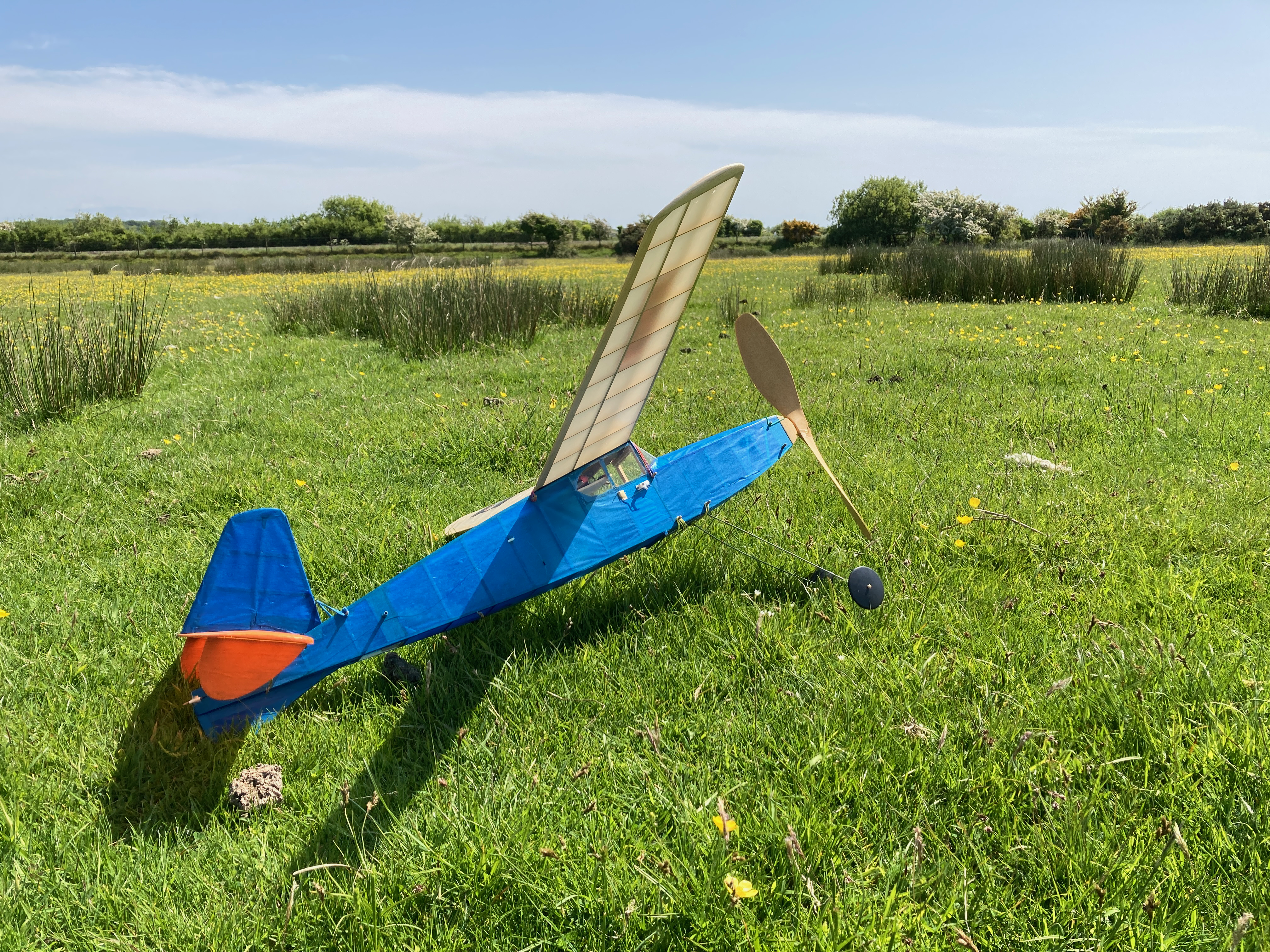
The model above is a Keil Kraft Gypsy of 40" wingspan - it flies well. It is fitted with a radio d/t to bring it down - usually when it is gliding.
The pictures below show the servo that when activated by the radio d/t, releases the 'moustrap' retaining the fishing trace that holds the tail down. The trace is held in tube guides and has a stop crimped on to limit the tail tilt to 45 degrees.