Tethered Cars
Introduction
Tethered cars are model cars powered by small engines, running on a circular track, tethered to a central post.
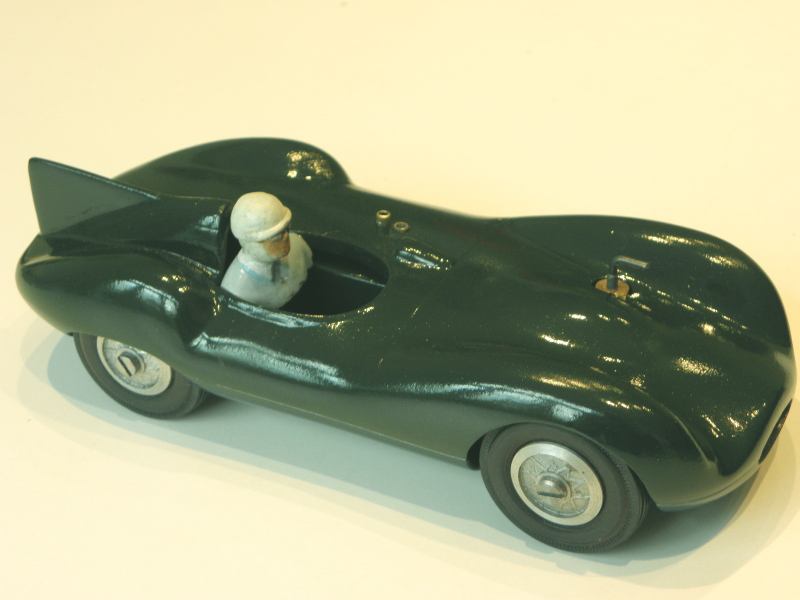
Origins
The strong links between model aircraft building and flying and tethered model car building and operation are very long
established. Tethered car activities started in the USA during the 1930s and had their beginnings in the WW2 years here in the
UK, when spark ignition engine powered aircraft operation had to be curtailed. The 1942 AeroModeller magazines carried a
series of articles including plans.
Early History
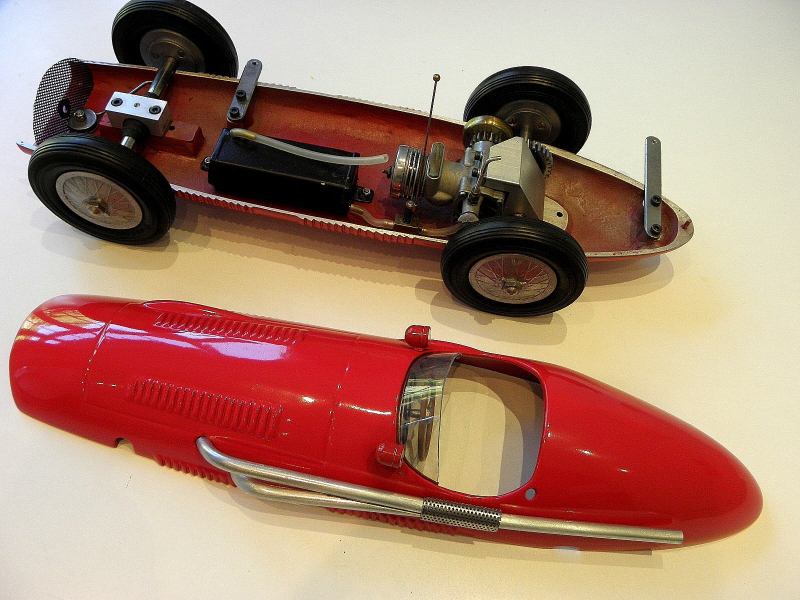
The British Model Car Club formed in 1944. Most British models were scale or semi-scale types, operating with centrifugal clutches and running at 30-50mph speeds. From the start in the 1930s,
American cars were largely non-scale or semi-scale “Offenhauser” types designed for much higher maximum speeds
using 10cc ignition engines, cast aluminium bodies and direct drive for push starting without clutches. A good range of parts were readily available in the USA, even in wartime. Post WW2, mass produced smaller
cars by Cox. Wen Mac & others became available. D A Russell’s “Model Race Cars” booklet was published in 1945, which included details of the first ten
pioneering i.c, powered cars, most at around 1:8 scale, with construction plans.
In 1946 the BMCC established its headquarters at the dedicated 72’ diameter track in Eaton Bray, and interest really
started to grow. Full size car manufacturers
like Austin and MG sponsored tethered car events & presented trophies.
Now
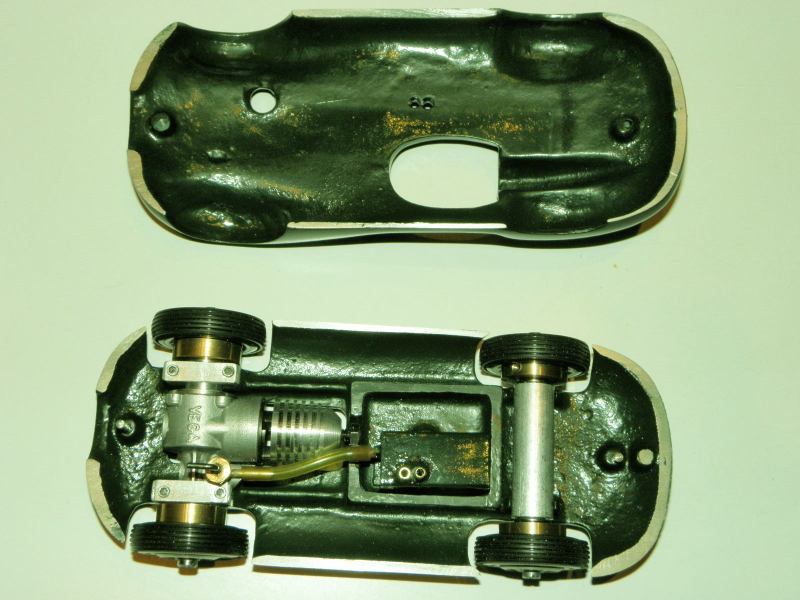
Today there is only one proper track left in the UK for enthusiasts to run their cars on; the
BMFA track at the National Flying Centre at Buckminster. This opened in 2020 and is regularly used by SAM Tethered Car
Interest Group (TCIG) members, who run vintage type scale, sport and propeller-driven car types. There are also
still two smaller, private tracks.