Free flight
The original flying models
Dating back to the earliest days of flight experimentation, free flight models are capable of flying without intervention once launched.
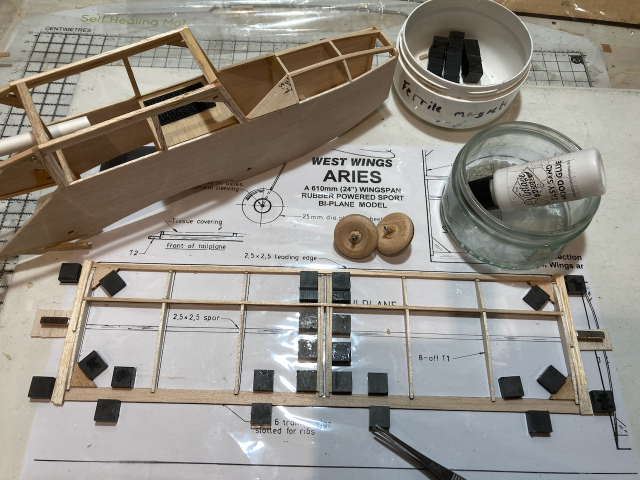
Construction
Using kits or plans, balsa wood, plywood and some other materials such as carbon fibre are glued together to make a light but strong structure
Balsa (a 'hardwood' with a good strength to weight ratio) is the main building material. It varies in density and strength, so careful selection of material to suit the use is something people learn. A light plane flies more slowly and hits the ground with less force - but it still has to be strong enough to be handled and to withstand flight forces.
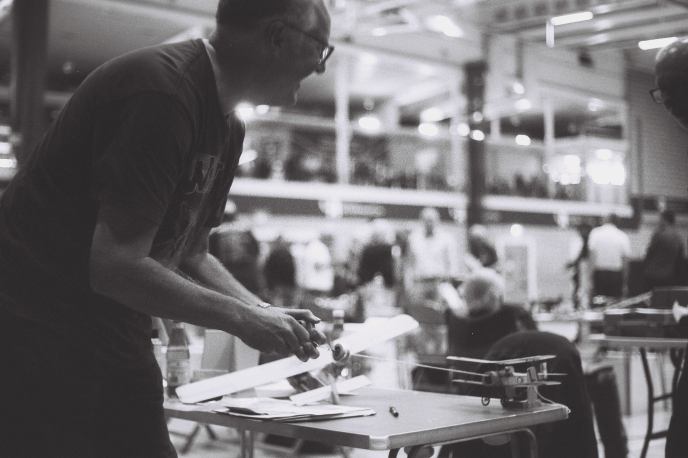
Rubber Power
Twisted rubber strips have been powering models since the beginning. By varying the cross-section and number of turns, the power and duration of flight can be carefully controlled. This is especially critical with indoor scale models that should rise off the floor, circle and land again. Outdoor rubber models can reach great heights.
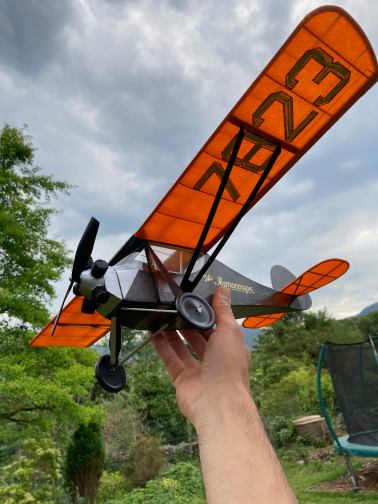
Electric Power
Not as common in free flight as one might expect. The problem has been getting consistent power and controlling the duration. There are now several flight controllers available that make this easier. Multi engine models and even ducted fans are now feasible.
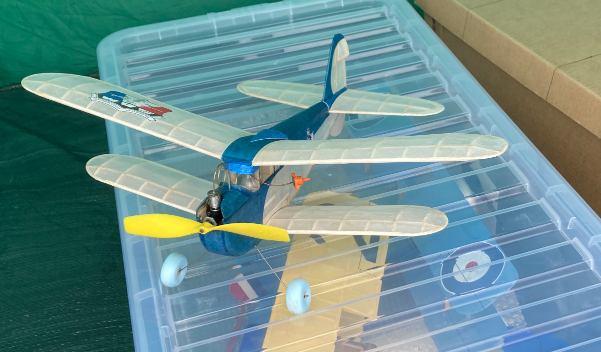
Carbon Dioxide Power
CO2 engines work by supplying high pressure gas from a small tank to the top of a cylinder to drive the piston. They are difficult to regulate but have the appeal and sound of a reciprocating engine without the mess of a diesel. They are used for small models. The engines can be difficult to source.
IC Engine Power
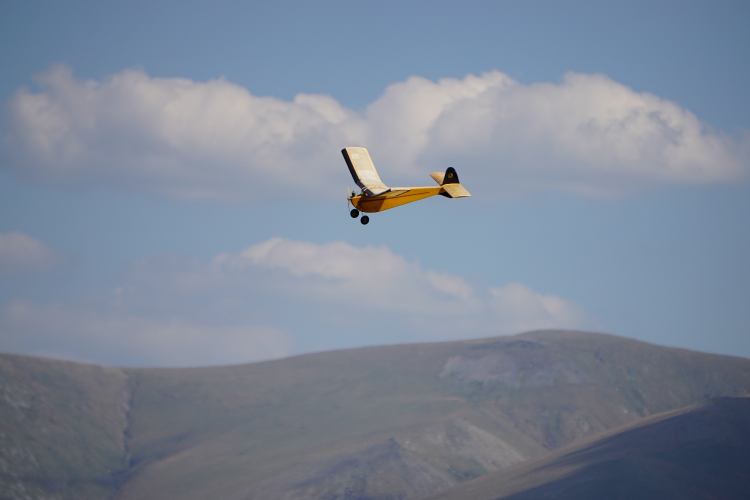
Two stroke diesel (strictly compression ignition) engines are most commonly used. They are simpler to set up than spark ignition engines - but there is a following for those too. Fast-revving glow plug engines suit rapidly climbing power duration models. IC engines are consistent, with good power/weight ratios - but have total loss lubrication - so are messy.
Gliders
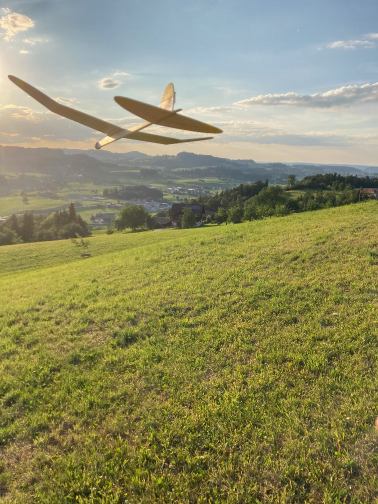
These models are thrown, catapulted or towed to height. The range from very light indoor models to 6' towline gliders. Duration competitions rely heavily on getting the model into thermal lift. Dethermaliser systems are often required to bring them down.
Rocket Power
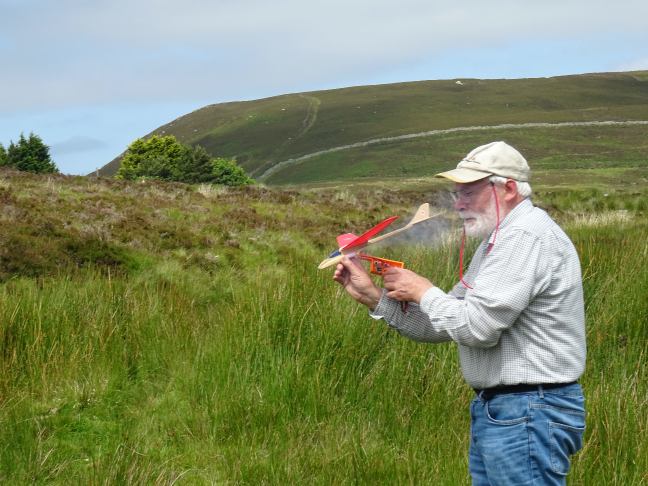
Ideal for scale jets, these use slow-burning rocket motors, either as single-use cartridges or fuel pellets in a casing. Supplies are intermittent and the models can be difficult to trim; but they are great when they work.
Indoor/Outdoor Models
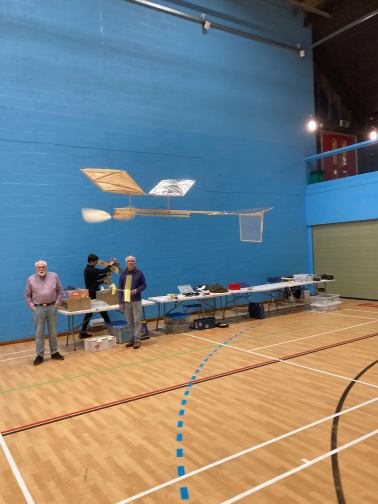
Freeflight models can be designed to fly in halls or outdoors. There is a degree of overlap, too. As there are only mild drafts to contend with, indoor models can be built very light, less than a gram for some classes. Scale models need not be waterproof and can take off from the ground - difficult to achieve outdoors. Flying outdoors allows for longer, higher flights and the thrill of chasing and finding the model again.
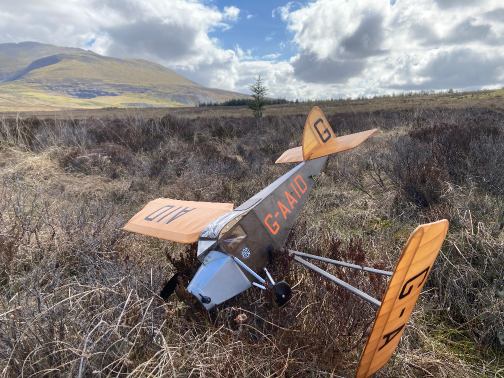
Scale models
Scale models are intended to be flying models representing real aeroplanes. The models are judged on their fidelity to the original as well as how convincing they are in flight - climb, cruise and landing. Of course, some are built just for fun. This rubber-powered ABC Robin has knock-off wings to reduce damage on landing and make the model easier to transport or store.
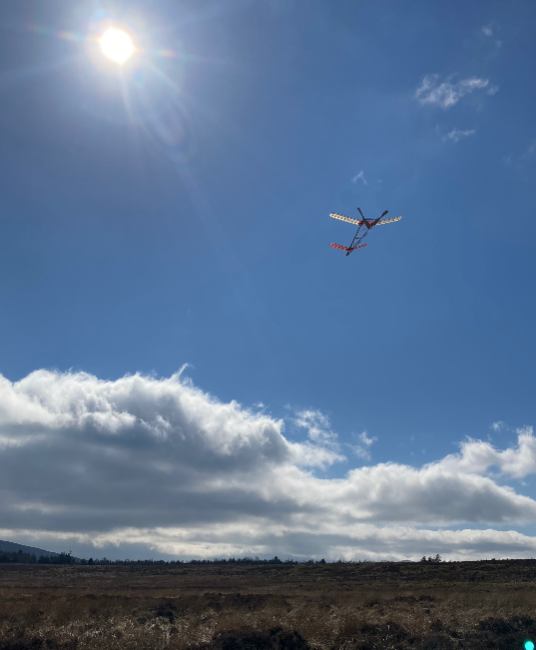
Duration Models
Duration models are designed to fly for as long as possible. Competition rules define limiting parameters for each class of models. The aim is to wring as much performance as possible by building light but reliable airframes. Careful choice of power and circuit size are important indoors. Outside, attention is paid to get models to fly in thermal updrafts and so prolong the flight.
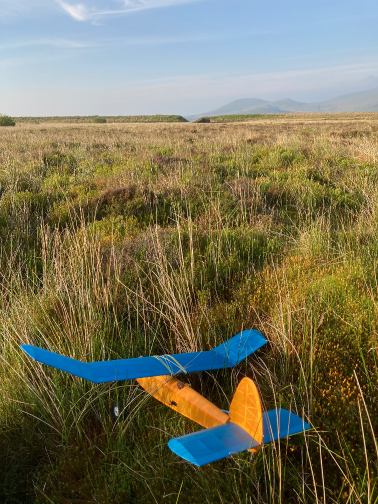
Sport Models
Most people fly models just for fun. Scale, duration or quirky types - not to any particular rule or aim. This diesel powered model has a dethermalizer in case it drifts too far with the wind. It is flown just for the joy of seeing it fly and the challenge of getting it to fly well. Retrieval can be good exercise - especially of soft, rough ground like this. A dethermaliser is a good idea.